Scar & Stretch Mark Treatment
Leave feedback on the product

Shipping costs are not included in the price.
Shipping costs are not included in the price.
Ask about the product

The controller of your personal data is SyneViaMed. We process your data solely to reply to your enquiry. For more information on how we process personal data, please see our Privacy Policy.
Share the product card



Description
Scar & Stretch Mark Treatment
About the course
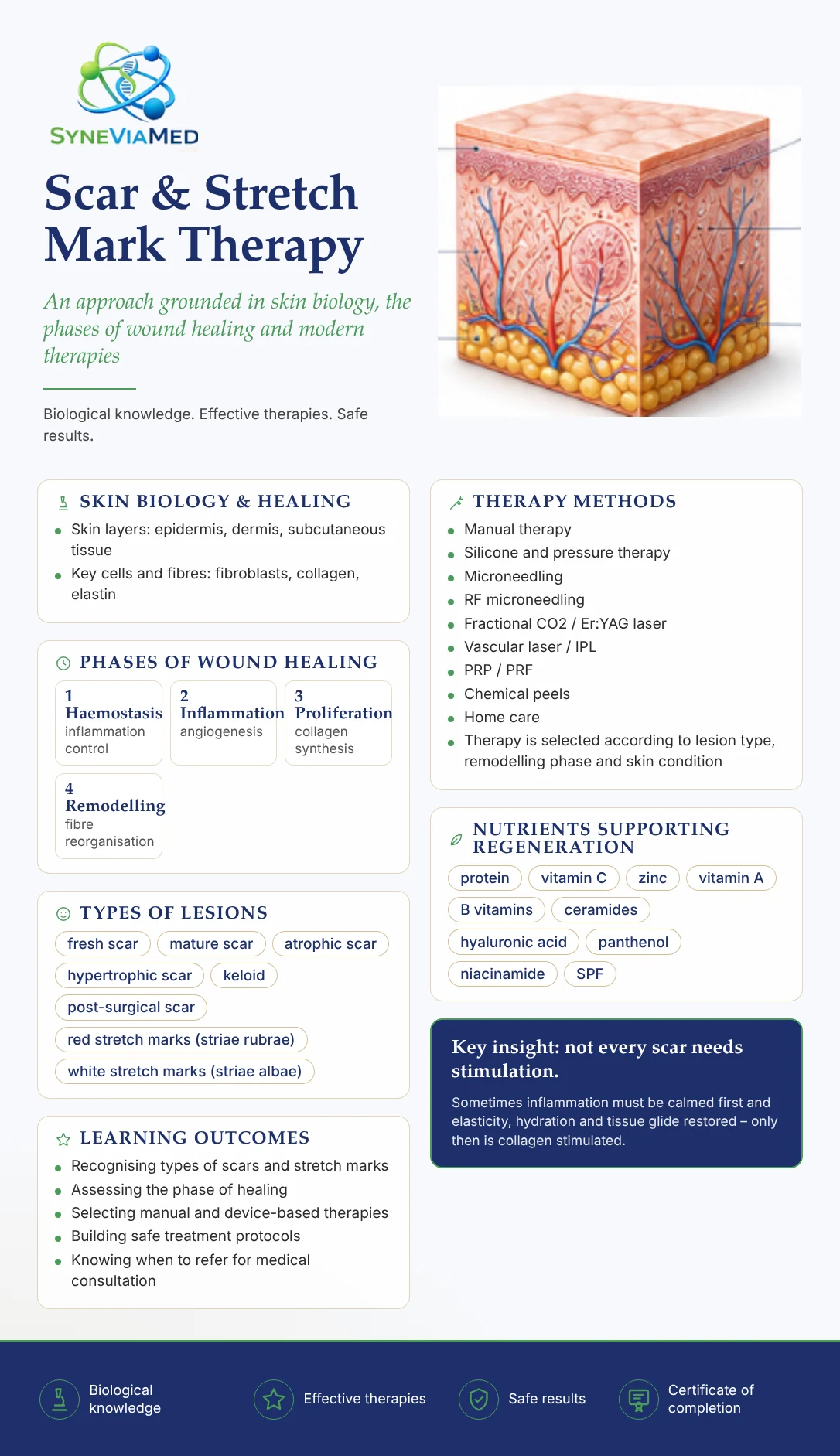
The course prepares you to work consciously with scars and stretch marks, based on skin biology, the phases of healing, collagen remodelling and current methods used in skin therapy, aesthetic physiotherapy and aesthetic medicine.
You will learn to recognise the type of scar or stretch mark, assess the remodelling phase and choose manual, device-based and skincare techniques that support regeneration without overloading the tissue.
The key message of the course: not every scar needs stimulating. Sometimes you first need to calm inflammation and improve elasticity, hydration and tissue glide – and only then stimulate collagen.
Scientific basis
Skin healing goes through the phases of haemostasis, inflammation, proliferation and remodelling. Scar quality depends on controlling inflammation, angiogenesis, fibroblast activity, collagen synthesis and the subsequent remodelling of collagen fibres. Nutrition and the availability of protein, vitamin C, zinc, vitamin A and B vitamins matter for collagen synthesis, immunity and proper wound closure.
For hypertrophic scars and keloids, the best-documented approaches are early and minimally invasive – especially silicone gel or sheets – and, in more advanced cases, combination treatment such as laser therapy, medical injections, pressure therapy or specialist procedures.
For stretch marks, current reviews show that the most commonly used and promising methods are microneedling, microneedling RF and fractional lasers – although effectiveness depends on the type: fresh, red stretch marks usually respond better than old, white ones.
Course programme
Module 1. Skin structure and how scars form
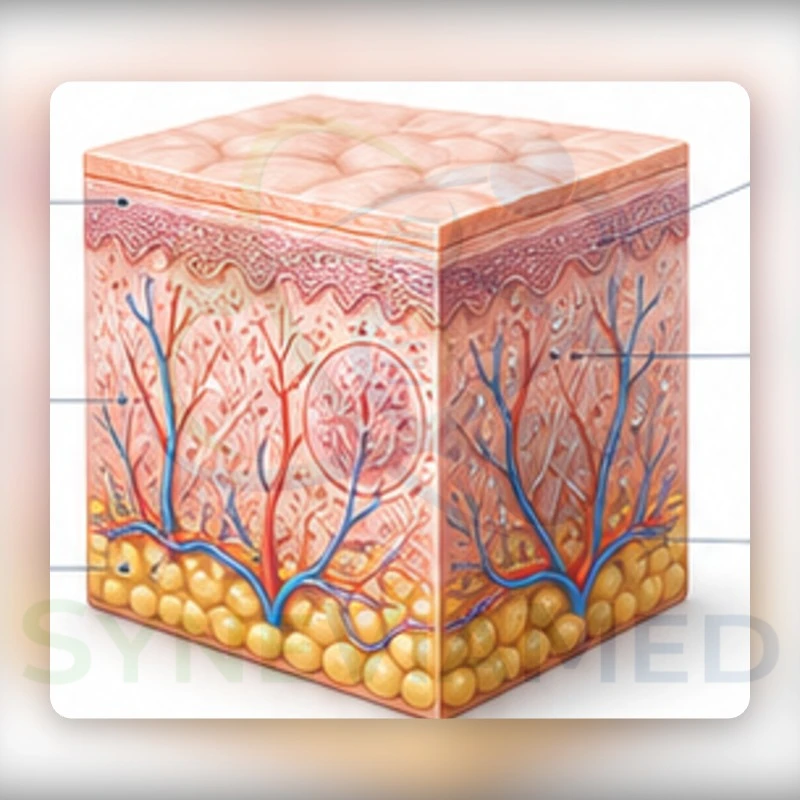
- structure of the epidermis, dermis and subcutaneous tissue
- the role of fibroblasts, collagen, elastin and the extracellular matrix
- regeneration vs repair
- risk factors for abnormal scarring
- the effect of mechanical tension, inflammation and ischaemia on scar appearance
You will understand why a scar can be hard, painful, depressed, red, hypertrophic or restrict movement.
Module 2. Healing phases and what the skin needs
Inflammatory phase
Goal: protect the tissue, control inflammation, minimise swelling.
The skin needs:
- cleanliness and barrier protection
- hydration without maceration
- adequate protein
- vitamin C, zinc, vitamin A and energy
- no aggressive stimulation
Proliferative phase
Goal: support the formation of new vessels, granulation tissue and collagen.
The skin needs:
- protein and amino acids
- vitamin C for collagen synthesis
- zinc for cell division
- gentle tissue mobilisation
- UV protection
Remodelling phase
Goal: improve scar elasticity, colour, thickness and glide.
The skin needs:
- regular, controlled stimulation
- silicone for hypertrophic scars
- manual mobilisation
- sun protection
- gradual collagen remodelling
Module 3. Types of scars and assessment
You will learn to recognise:
- fresh scars
- mature scars
- atrophic scars
- hypertrophic scars
- keloids
- post-surgical scars
- acne scars
- burn scars
- caesarean section scars
- scars that restrict movement and tissue glide
Assessment covers:
- colour
- thickness
- mobility
- pain
- itching
- temperature
- skin tension
- adhesions
- effect on function
Module 4. Stretch marks – understanding the problem
- striae rubrae – fresh, red or purple stretch marks
- striae albae – old, white stretch marks
- loss of collagen and elastin fibres
- the effect of pregnancy, weight gain, hormones and rapid skin stretching
- realistic assessment of treatment results
Key point: a stretch mark is not a “tear in the epidermis” but a change in the structure of the dermis. That is why effective treatments must remodel the skin, not just exfoliate it.
Module 5. Manual scar therapy
Techniques:
- scar mobilisation
- layer-by-layer work
- gliding techniques
- fascial therapy
- working with tissue adherence
- anti-adhesion techniques
- scar massage
- elements of drainage for swelling
Used for:
- post-surgical scars
- caesarean section scars
- post-traumatic scars
- scars that limit mobility
- painful or pulling scars
Module 6. Silicone, pressure therapy and home care
- silicone sheets
- silicone gels
- pressure therapy for hypertrophic scars
- UV protection
- hydration and barrier repair
- skincare that supports skin elasticity
Silicone is especially important in preventing and treating hypertrophic scars and keloids, but it is only used on closed, healed skin.
Module 7. Technologies used in scar therapy
Microneedling
Works well for:
- atrophic scars
- acne scars
- stretch marks
- uneven skin texture
Mechanism:
- controlled micro-injury
- fibroblast stimulation
- collagen remodelling
Microneedling RF
Works well for:
- stretch marks
- lax skin
- atrophic scars
- uneven texture
Mechanism:
- microneedling + thermal energy
- collagen and elastin stimulation
- skin thickening
Fractional CO2 / Er:YAG laser
Works well for:
- acne scars
- atrophic scars
- old stretch marks
- uneven skin texture
- selected hypertrophic scars under specialist supervision
Fractional CO2 laser has proven use in scar remodelling, especially when the goal is to improve texture, thickness and elasticity.
Vascular laser / IPL
Works well for:
- red scars
- fresh striae rubrae
- post-inflammatory erythema
- excessive scar vascularity
PRP / PRF
Useful as support for:
- atrophic scars
- stretch marks
- skin regeneration after microneedling or laser
For atrophic scars, reviews show benefits from combining microneedling, lasers and PRP, especially for skin remodelling and improving texture.
Chemical peels
Work well for:
- post-inflammatory hyperpigmentation
- shallow irregularities
- skin with acne scars
- as part of combination therapy
They are not a primary treatment for deep scars or stretch marks, but can improve skin tone and surface.
Module 8. Combination therapies – what to combine
Fresh post-surgical scar
- Protection, education, reducing swelling
- Silicone once the wound has closed
- Gentle mobilisation
- Manual therapy + skincare + UV protection
- Laser / microneedling only after assessment and adequate healing time
Hypertrophic scar
Most often combined:
- silicone
- pressure therapy, where possible
- manual therapy within safe limits
- vascular laser for redness
- fractional laser for hardness and texture
- medical treatment for active hypertrophy or keloid
Atrophic / acne scar
Most often combined:
- subcision for tethered/rolling scars – a medical procedure
- microneedling
- microneedling RF
- fractional laser
- PRP/PRF
- peels for skin tone
Fresh red stretch marks
Most often combined:
- vascular laser / IPL
- gentle microneedling
- ingredients that support the barrier and regeneration
- UV protection
Old white stretch marks
Most often combined:
- microneedling RF
- microneedling
- fractional laser
- PRP/PRF
- skincare that improves elasticity
Results for stretch marks usually mean improved texture, colour and firmness – not complete removal.
Module 9. Active ingredients that support skin regeneration
- vitamin C – collagen synthesis, antioxidant
- retinoids – remodelling of the epidermis and dermis, not on fresh wounds
- peptides – support for repair signals
- ceramides and lipids – barrier repair
- hyaluronic acid – hydration
- panthenol, allantoin, beta-glucan – soothing
- niacinamide – barrier and pigmentation
- SPF – preventing pigmentation and scar worsening
Module 10. Contraindications and red flags
You must be able to recognise situations that require medical consultation:
- open wound
- exudate
- infection
- increasing redness and warmth
- throbbing pain
- suspected keloid
- impaired healing
- uncontrolled diabetes
- immunosuppressive treatment
- recent radiotherapy
- pregnancy for selected procedures
- tendency to keloids
Module 11. Practical protocols
Ready-to-use protocols:
- fresh scar protocol
- caesarean section scar protocol
- post-surgical body scar protocol
- acne scar protocol
- hypertrophic scar protocol
- red stretch mark protocol
- white stretch mark protocol
- combined clinic + home therapy protocol
Module 12. Course outcomes
After the course you will:
- recognise types of scars and stretch marks
- understand the healing phases and what the skin needs
- match therapy to the stage of regeneration
- know when to stimulate and when to calm the tissue
- combine manual therapy, skincare and technology
- create safe in-clinic protocols
- understand the limits of therapy and when to refer for medical consultation
Who is it for?
- physiotherapists
- skin therapists
- midwives and nurses
- manual therapists
Reviews
If you've added a review and it doesn't appear on the list, it may be pending moderation.
Leave feedback on the product


