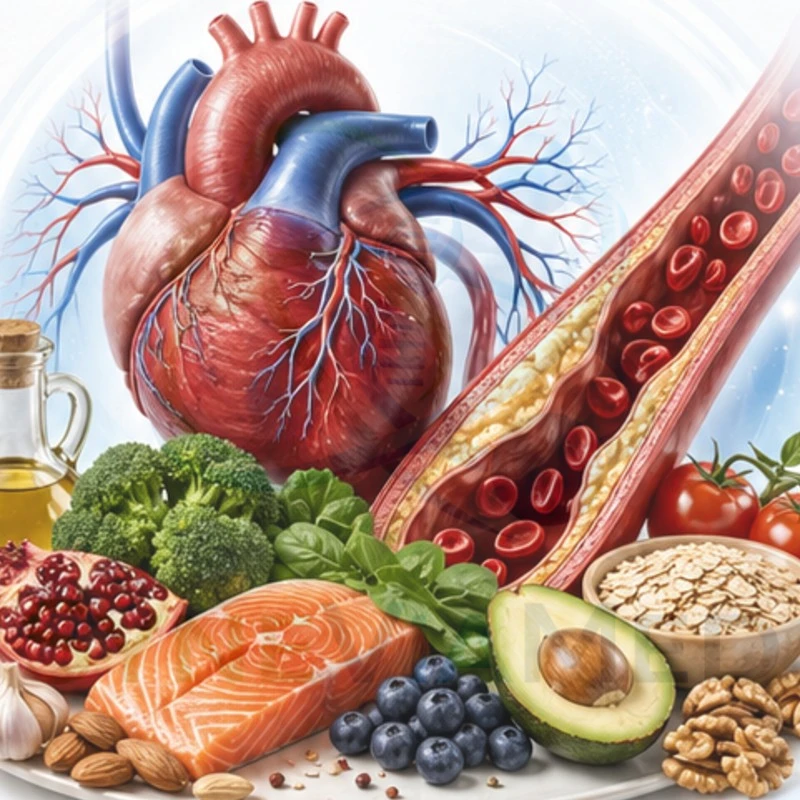
Nutrition for Heart & Cardiovascular Health
Leave feedback on the product

Shipping costs are not included in the price.
Shipping costs are not included in the price.
Ask about the product

The controller of your personal data is SyneViaMed. We process your data solely to reply to your enquiry. For more information on how we process personal data, please see our Privacy Policy.
Share the product card



Description
Nutrition for cardiovascular disease – course overview
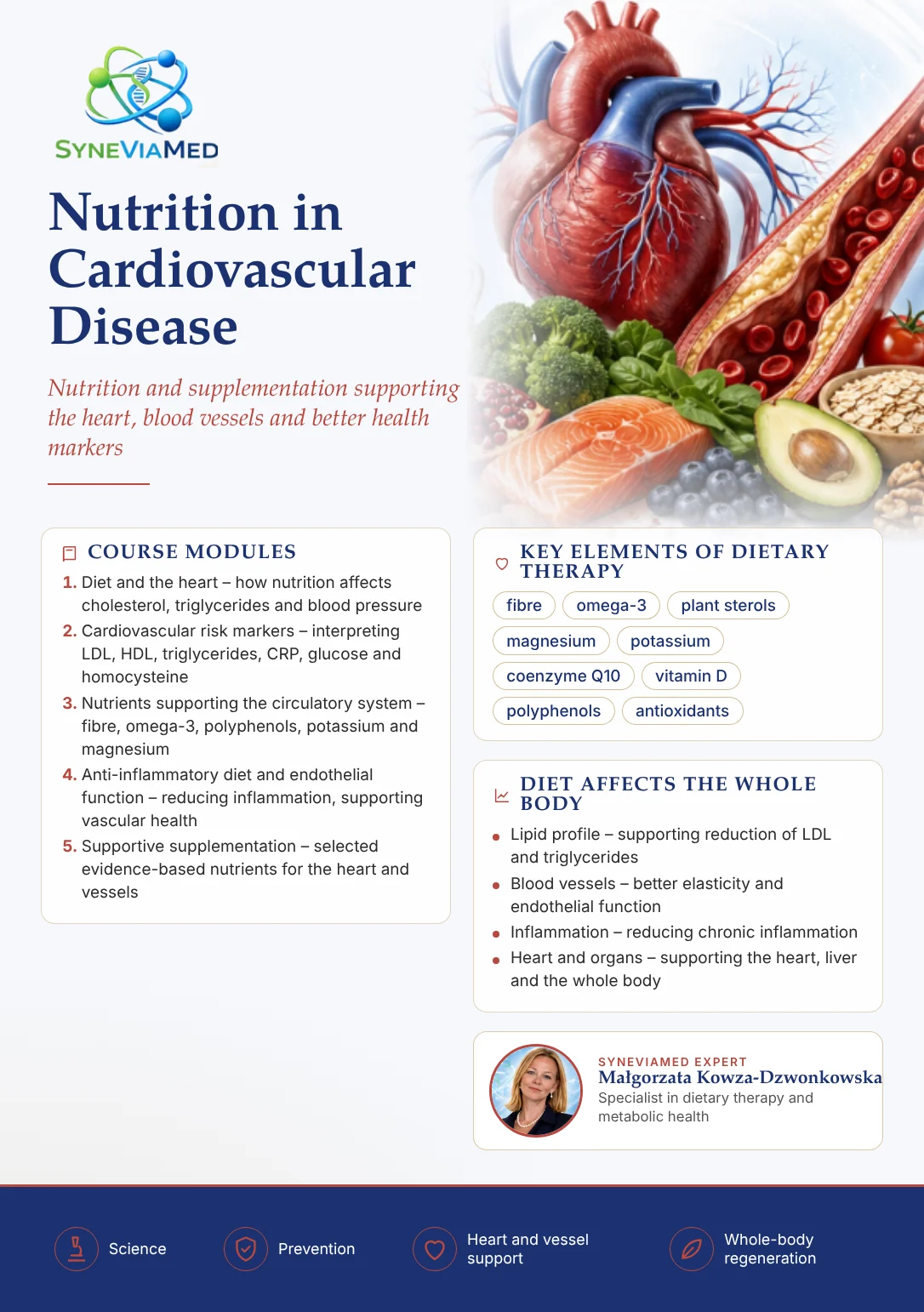
The course is based on current scientific evidence and guidelines from organisations such as the European Society of Cardiology, the American Heart Association and the World Health Organization.
The programme focuses on the real effect of diet on clinical markers, including:
- LDL, HDL, TG
- CRP and inflammation
- blood pressure
- endothelial function
- oxidative stress
- blood clotting
The course shows how diet can: ✔ lower LDL cholesterol ✔ improve vascular elasticity ✔ reduce inflammation ✔ support heart function ✔ reduce the risk of heart attack and stroke
Key areas of the course
- pathophysiology of atherosclerosis
- the lipid profile and how to optimise it
- the Mediterranean and DASH diets
- the role of the microbiota (TMAO)
- hypertension
- coronary heart disease
- heart failure
- interpreting tests (CRP, ApoB, homocysteine)
Clinical takeaways
✔ the overall dietary pattern has the greatest impact, not a single nutrient ✔ LDL, blood pressure and inflammation can be significantly reduced through diet ✔ supplements are support, not the basis of treatment ✔ the microbiota and its metabolites (TMAO) are a key new area
Important dietary components (evidence-based)
Fats and lipids
- omega-3 fatty acids (EPA/DHA)
- olive oil (MUFA)
- plant sterols/stanols
Fibre
- beta-glucans (oats)
- psyllium
- fermentable fibre (SCFA)
Polyphenols
- resveratrol
- flavonoids (cocoa, tea)
- anthocyanins
Minerals and vitamins
- magnesium
- potassium
- vitamins D and K2
- B vitamins (homocysteine)
Supplements
Which ones, when and at what dose:
- omega-3 (↓ TG, ↓ cardiovascular risk)
- plant sterols (↓ LDL 7–10%)
- fibre (↓ LDL, better blood sugar control)
- coenzyme Q10 (heart failure)
- garlic (blood pressure, LDL)
- berberine (lipids, glucose)
- curcumin (inflammation)
- vitamin D (when deficient)
- magnesium (blood pressure)
- NAC (oxidative stress)
After our course you will receive:
✔ specific protocols – case studies ✔ base diet templates for the most common needs ✔ a list of key supplements with doses ✔ hands-on practice in working with patients and personalising the diet
Reviews
If you've added a review and it doesn't appear on the list, it may be pending moderation.
Leave feedback on the product


