
Nutrition for Hair Health (Trichology)
Leave feedback on the product

Nutrition for Hair Health (Trichology)
€247.05
Price
€247.05
without 23% VAT
Regular price:
€247.05
0%
The lowest price during 30 days prior to the reduction:
€437.08
-43%
Shipping costs are not included in the price.
€303.87
Price
€303.87
incl. 23% VAT
Regular price:
€303.87
0%
The lowest price during 30 days prior to the reduction:
€537.61
-43%
Shipping costs are not included in the price.
Enrolment open
Ask about the product

Nutrition for Hair Health (Trichology)
The controller of your personal data is SyneViaMed. We process your data solely to reply to your enquiry. For more information on how we process personal data, please see our Privacy Policy.
Share the product card



Description
Description
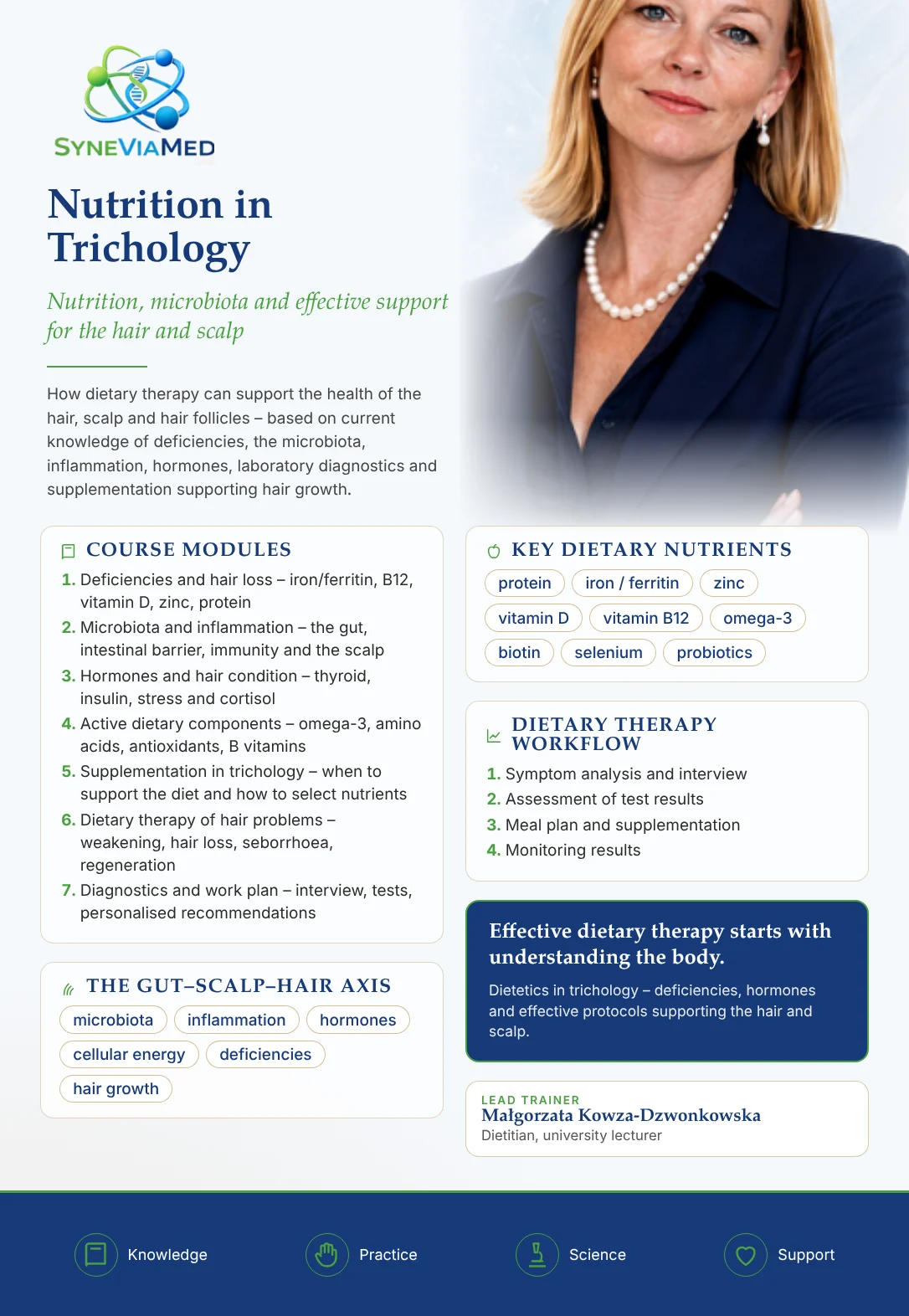
Course programme – Nutrition in Trichology
Introduction to nutrition in trichology
- the role of nutrition in the hair growth cycle
- why diet matters for hair follicle function
- the link between overall health and hair and scalp condition
- how diet affects hair density, thickness, quality and growth rate
Module 1. Trichology and hair biology basics
- structure of the hair and hair follicle
- the hair cycle: anagen, catagen, telogen
- physiology of hair growth
- the main causes of weak hair
- the link between metabolism and hair condition
- the scalp as the environment for hair growth
Module 2. Diet and hair health
- how nutritional deficiencies affect hair loss
- the effect of energy and protein intake on the hair follicle (which protein sources?)
- why diet quality matters for hair
- anti-inflammatory diet for scalp and hair
- the effect of restrictive diets, fasting and rapid weight loss on hair loss
- the most common dietary mistakes that worsen hair condition
Module 3. Key nutrients that support hair
- protein and sulphur amino acids, iron and ferritin, zinc, vitamin D
- B vitamins, biotin – when it makes sense and when it doesn’t, selenium – its role and the risk of excess, copper, magnesium and other trace elements
- essential fatty acids, antioxidants that support the scalp and hair follicles
Module 4. Active nutrients in the diet that improve hair
- foods that support hair growth and quality
- the importance of omega-3 and omega-6 fats
- foods that support microcirculation and scalp nourishment
- the importance of foods rich in iron, zinc and B vitamins
- a diet that supports the scalp barrier
- how to plan a menu that supports hair and the whole body
Module 5. Supplements in trichology
- when supplementation is justified
- how to assess real indications for supplements
- supplements that support hair density
- supplements that support hair shaft thickness and quality
- multi-ingredient products vs targeted supplementation
- supplementing deficiencies confirmed by tests
- the most common mistakes in “hair” supplements
- the risk of excess vitamins and minerals
Module 6. Diet and supplements for different types of hair loss
- androgenetic alopecia – nutrition that supports treatment
- telogen effluvium – the role of deficiencies and recovery
- alopecia areata – dietary and immunometabolic support
- hair loss after stress, illness, childbirth and surgery
- hair loss linked to hormonal disorders
- diet that supports trichology treatment depending on the problem
Module 7. What harms hair and scalp
- low-energy and low-protein diets
- food eliminations without indication
- too many supplements
- iron, zinc, vitamin D and protein deficiencies
- excess vitamin A and selenium
- gut disorders and hair condition
- chronic inflammation and oxidative stress
- lifestyle factors that worsen hair quality
Module 8. Scalp and diet
- diet and seborrhoea, dryness and scalp irritation
- the effect of nutrition on scalp inflammation
- gut microbiota and its role in skin and hair
- hydration and scalp condition
- supporting scalp regeneration with diet and supplements
Module 9. Nutritional assessment of trichology clients
- how to take a combined nutrition and trichology history
- how to recognise possible deficiencies
- which tests to review for hair problems
- interpreting basic lab results in the context of hair
- when to refer to a doctor or clinical dietitian
- how to build dietary advice in clinical practice
Module 10. Practical client management
- creating a nutrition support plan for a client with hair problems
- matching advice to the type of hair loss and overall health
- choosing supplements based on test results and symptoms
- the most common approaches in practice
- case analysis and client studies
- errors and limitations when working with trichology clients
What you will learn
- to assess how diet affects hair and scalp condition
- to recognise the most common deficiencies linked to hair loss
- to choose a diet that supports hair growth, density and quality
- to understand the role of supplements in different types of hair loss
Reviews
Reviews
Number of ratings: 0
If you've added a review and it doesn't appear on the list, it may be pending moderation.
Leave feedback on the product


