
Nutrition for Gut Health – IBS, SIBO & the Microbiome
Leave feedback on the product

Shipping costs are not included in the price.
Shipping costs are not included in the price.
Ask about the product

The controller of your personal data is SyneViaMed. We process your data solely to reply to your enquiry. For more information on how we process personal data, please see our Privacy Policy.
Share the product card



Description
Nutrition therapy for gut disorders – IBS, SIBO, the microbiome
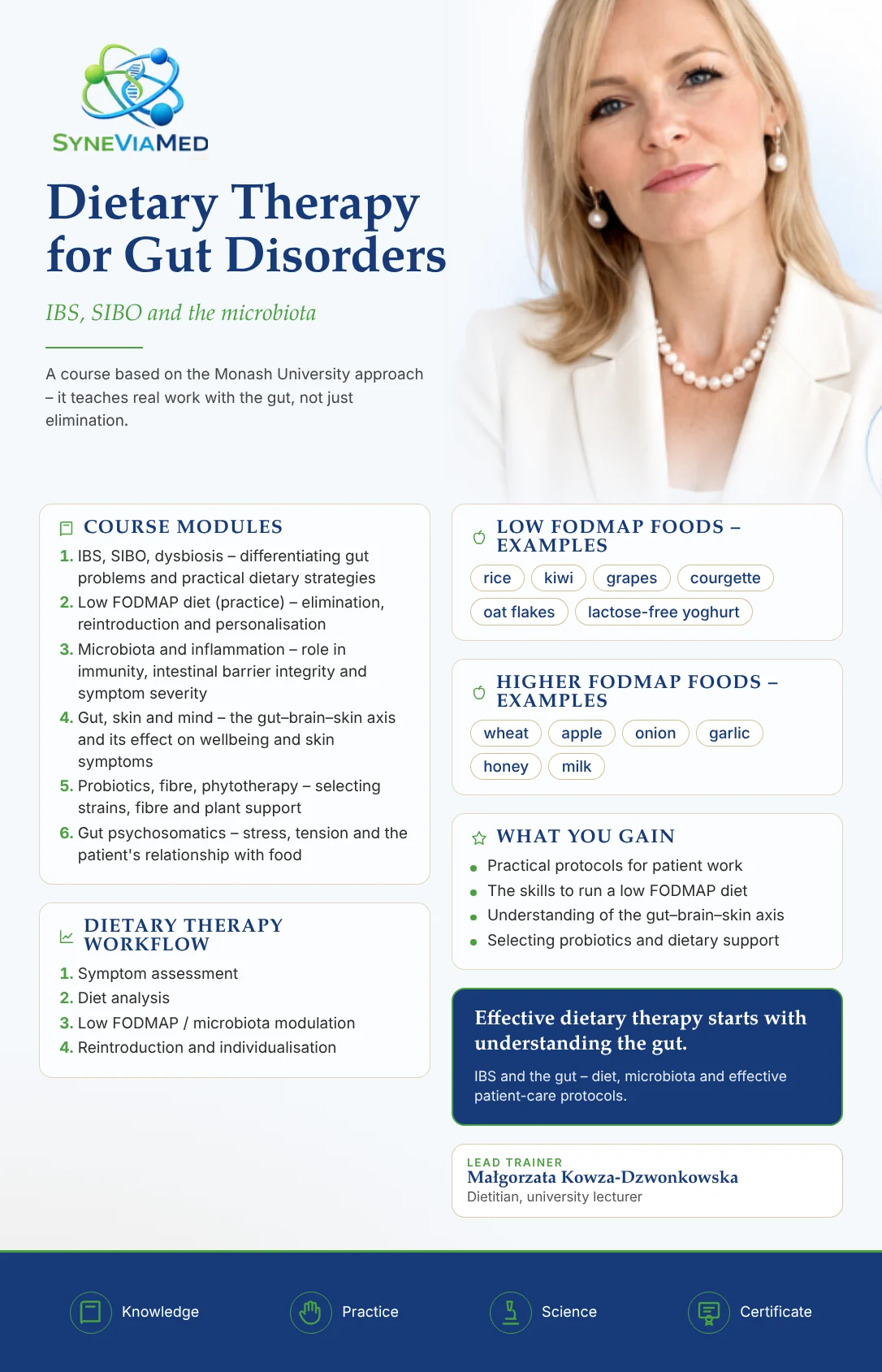
Based on the approach of Monash University – the leader in low-FODMAP research – the course focuses on practical, clinical work with clients rather than restrictive eliminations alone.
The programme integrates current data from gastroenterology, clinical nutrition and research on the gut microbiota and the gut–brain axis.
Key areas of the course
IBS and gut–brain interaction disorders
Irritable bowel syndrome is classified as a disorder of gut–brain interaction (DGBI). We cover:
- visceral hypersensitivity
- gut motility disorders
- the role of stress and the gut–brain axis
SIBO – diagnosis and nutrition therapy
- interpreting breath tests (H₂/CH₄)
- differences between hydrogen and methane SIBO
- dietary strategies (low FODMAP vs individual modifications)
The low-FODMAP diet – a practical approach
The 3-phase model developed by Monash University:
Elimination (2–6 weeks) ↓ Reintroduction (testing FODMAP groups) ↓ Personalisation (individual tolerance)
- the effect of FODMAPs on fermentation and gas production
- the risk of excessive restriction → impact on the microbiota
The gut microbiota and inflammation
Gut dysbiosis is linked to:
- increased intestinal permeability
- immune system activation
- chronic inflammation
Mechanism: dysbiosis → ↑ intestinal permeability (leaky gut) → LPS translocation → immune activation → inflammation
The gut, skin and mental health
Clinical links:
- acne and atopic dermatitis
- mood disorders (anxiety, depression)
Mechanisms:
- microbial metabolites (SCFA)
- inflammatory cytokines
- neurotransmitter modulation (e.g. serotonin)
Probiotics, fibre and herbal medicine
- strain-specific effects of probiotics (evidence-based)
- soluble fibre (e.g. psyllium) → improvement in IBS
- fermentable fibre → effect on SCFA
- peppermint oil
- berberine
- antibacterial preparations in SIBO
Gut psychosomatics
- stress as a factor that modulates IBS symptoms
- cognitive behavioural therapy (CBT)
- relaxation techniques
- modulating the gut–brain axis
Clinical approach – working with clients
- Diagnosis (symptoms + tests)
- Nutrition intervention (low FODMAP / personalisation)
- Microbiota support (probiotics + fibre)
- Lifestyle regulation (stress, sleep)
- Reintroduction and long-term strategy
Reviews
If you've added a review and it doesn't appear on the list, it may be pending moderation.
Leave feedback on the product


