
Nutrition for Depression & Mood Disorders
Leave feedback on the product

Shipping costs are not included in the price.
Shipping costs are not included in the price.
Ask about the product

The controller of your personal data is SyneViaMed. We process your data solely to reply to your enquiry. For more information on how we process personal data, please see our Privacy Policy.
Share the product card



Description
Nutrition for depression and mood disorders
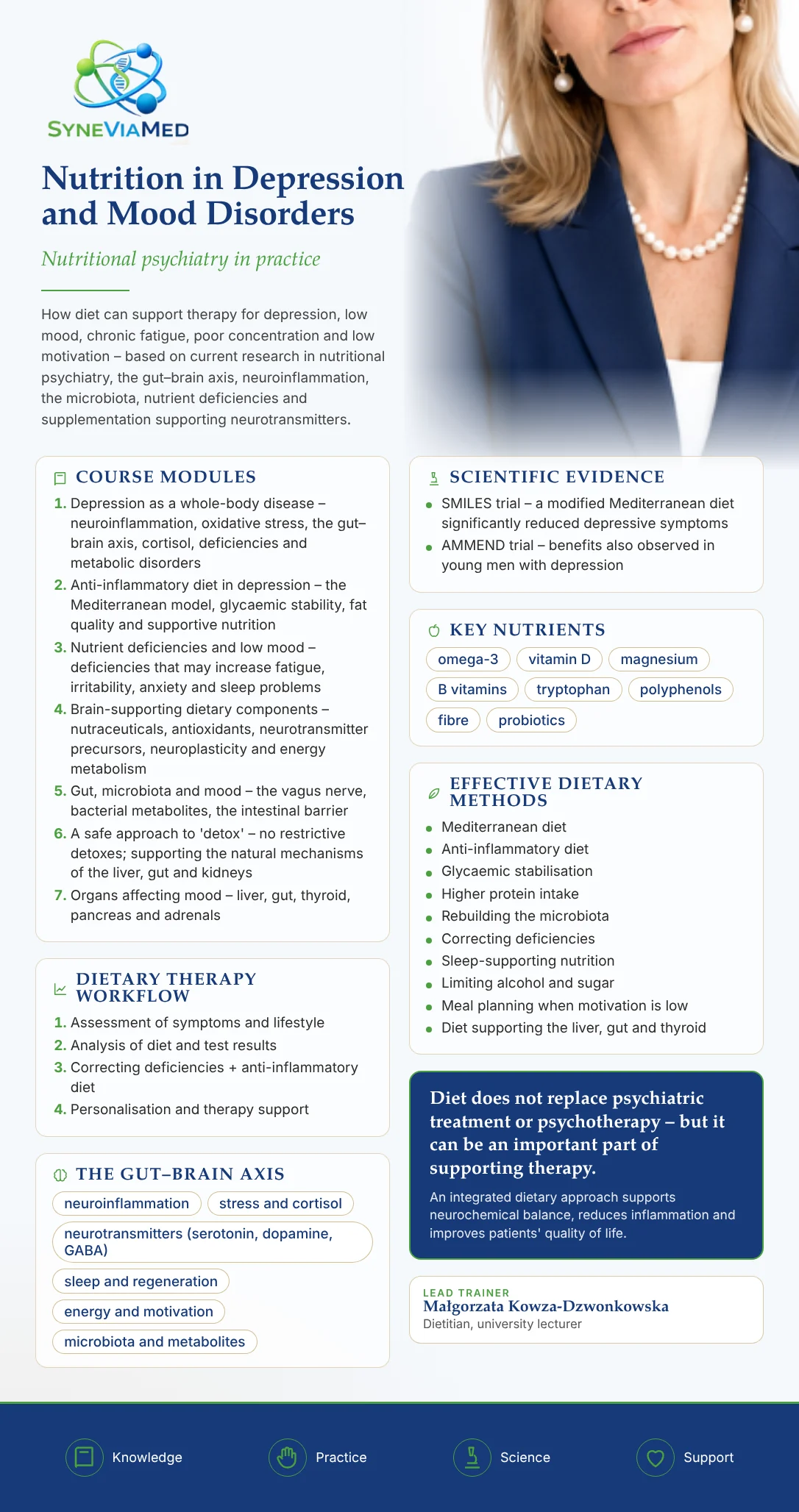
Nutrition, the microbiota, neurotransmitters and support for brain function
About the course
The course shows how diet can support the treatment of depression, low mood, chronic fatigue, poor concentration and low motivation. The programme is based on current research in nutritional psychiatry, the gut–brain axis, neuroinflammation, the microbiota, nutritional deficiencies and supplements that support neurotransmitters.
Diet does not replace psychiatric treatment or psychotherapy, but it can be an important supporting element. In the SMILES trial, a modified Mediterranean diet significantly reduced symptoms in people with depression compared with a control group. Similar benefits were shown in the AMMEND trial in young men with depression.
Course programme
Module 1. Depression as a whole-body condition
You will learn the key biological mechanisms linked to depression:
- neuroinflammation and chronic inflammation
- oxidative stress
- gut–brain axis disorders
- cortisol dysregulation
- nutritional deficiencies
- glucose and insulin imbalance
- the effects of sleep, stress and physical activity
Depression is not simply a “lack of serotonin”. It is a complex state involving the nervous, immune, hormonal, digestive and metabolic systems.
Module 2. Anti-inflammatory diet for depression
The best-documented eating model for mental health is the Mediterranean diet. Reviews show that complete dietary interventions, especially those based on the Mediterranean diet, can reduce symptoms of depression, although larger studies are still needed.
Module 3. Nutritional deficiencies and low mood
We discuss nutrients whose deficiency can worsen fatigue, irritability, anxiety, sleep problems and low motivation.
Module 4. Active dietary components that support the brain
- Anti-inflammatory support and the use of nutraceuticals
- Nutritional deficiencies
- Dietary support for the nervous system, tension regulation, sleep and the stress response
- Dietary support for neuroplasticity, resilience and neuronal receptor function
- Nutrients needed for neurotransmitter production and homocysteine regulation
- Serotonin precursors – their metabolism depends on inflammation, the microbiota and protein intake
- Dopamine and noradrenaline precursors – important for motivation, energy and focus
- Antioxidant and anti-inflammatory nutrients
- Support for the gut–brain axis, the gut barrier and immunity
- Support for brain energy metabolism, especially in people with severe fatigue
Module 5. The gut, microbiota and mood
The course explains how the gut affects the brain through:
- the vagus nerve
- bacterial metabolites
- the immune system
- neurotransmitter production and metabolism
- gut barrier permeability
Module 6. “Detox diets” – a safe approach
We discuss toxins scientifically. We do not recommend aggressive fasting, juice detoxes or restrictive “cleansing” regimes, as they can worsen mood, trigger binge eating, lower energy and lead to deficiencies.
Instead, we use a diet that supports the body’s natural detoxification mechanisms – the liver, gut, kidneys and lymphatic system.
Module 7. Organs that influence mood
Liver
Responsible for metabolising hormones, medication, alcohol and metabolic waste. A diet rich in protein, choline, cruciferous vegetables, antioxidants and fibre supports its function.
Gut
Influences immunity, inflammation, the microbiota and the gut–brain axis.
Thyroid
Hypothyroidism can cause symptoms similar to depression: fatigue, sleepiness, low motivation, weight gain.
Pancreas and glucose balance
Blood sugar swings can increase irritability, anxiety, fatigue and hunger attacks.
Adrenals and the stress axis
Chronic stress and a disrupted cortisol rhythm affect sleep, appetite and mental resilience.
Effective dietary approaches covered
- the Mediterranean diet
- an anti-inflammatory diet
- stabilising blood sugar
- increasing protein intake
- rebuilding the microbiota
- correcting deficiencies
- supporting sleep through diet
- limiting alcohol and sugar
- meal planning when motivation is low
- a diet that supports the liver, gut and thyroid
Reviews
If you've added a review and it doesn't appear on the list, it may be pending moderation.
Leave feedback on the product


