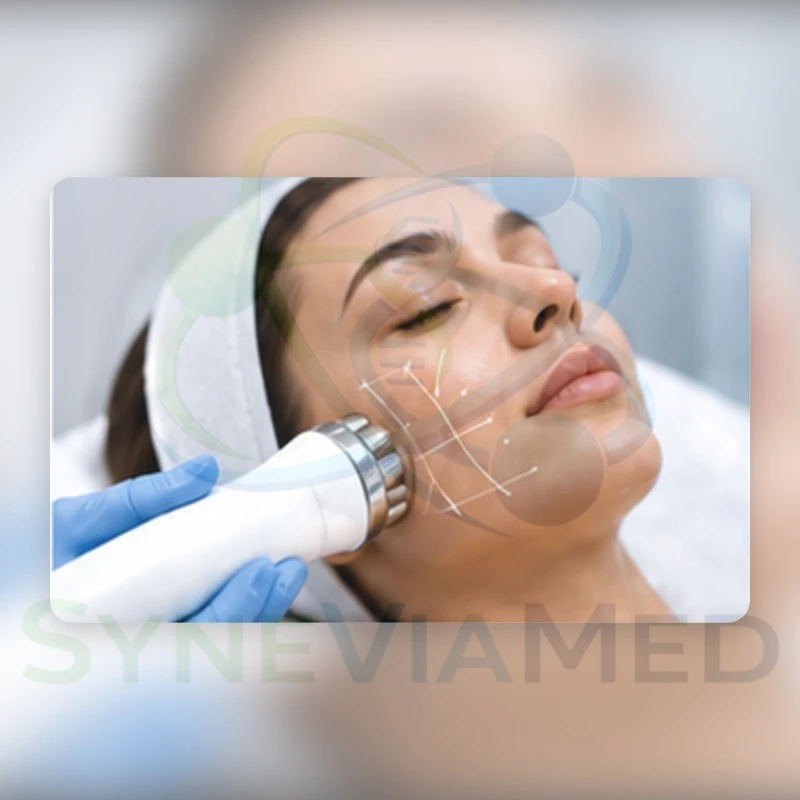

RF Expert (Radiage) – Fractional, Monopolar, Bipolar & Multipolar Radiofrequency
Leave feedback on the product

Shipping costs are not included in the price.
Shipping costs are not included in the price.
Ask about the product

The controller of your personal data is SyneViaMed. We process your data solely to reply to your enquiry. For more information on how we process personal data, please see our Privacy Policy.
Share the product card



Description
The course offers a comprehensive, advanced approach to radiofrequency (RF) technologies used to treat the skin and subcutaneous tissue of the face and body.
The programme focuses on the differences between monopolar, bipolar and multipolar systems and their modern variants (including microneedling RF and fractional systems), taking into account their physical, biological and clinical properties.
RF technologies work by generating controlled heat in tissue (usually 40–45°C in the dermis), leading to denaturation of collagen fibres and induction of neocollagenesis and neoelastogenesis. Histological studies have shown increased expression of type I and III collagen and remodelling of the extracellular matrix after a series of RF treatments, which translates into improved skin firmness and elasticity.
A key element of the course is understanding the differences between systems:
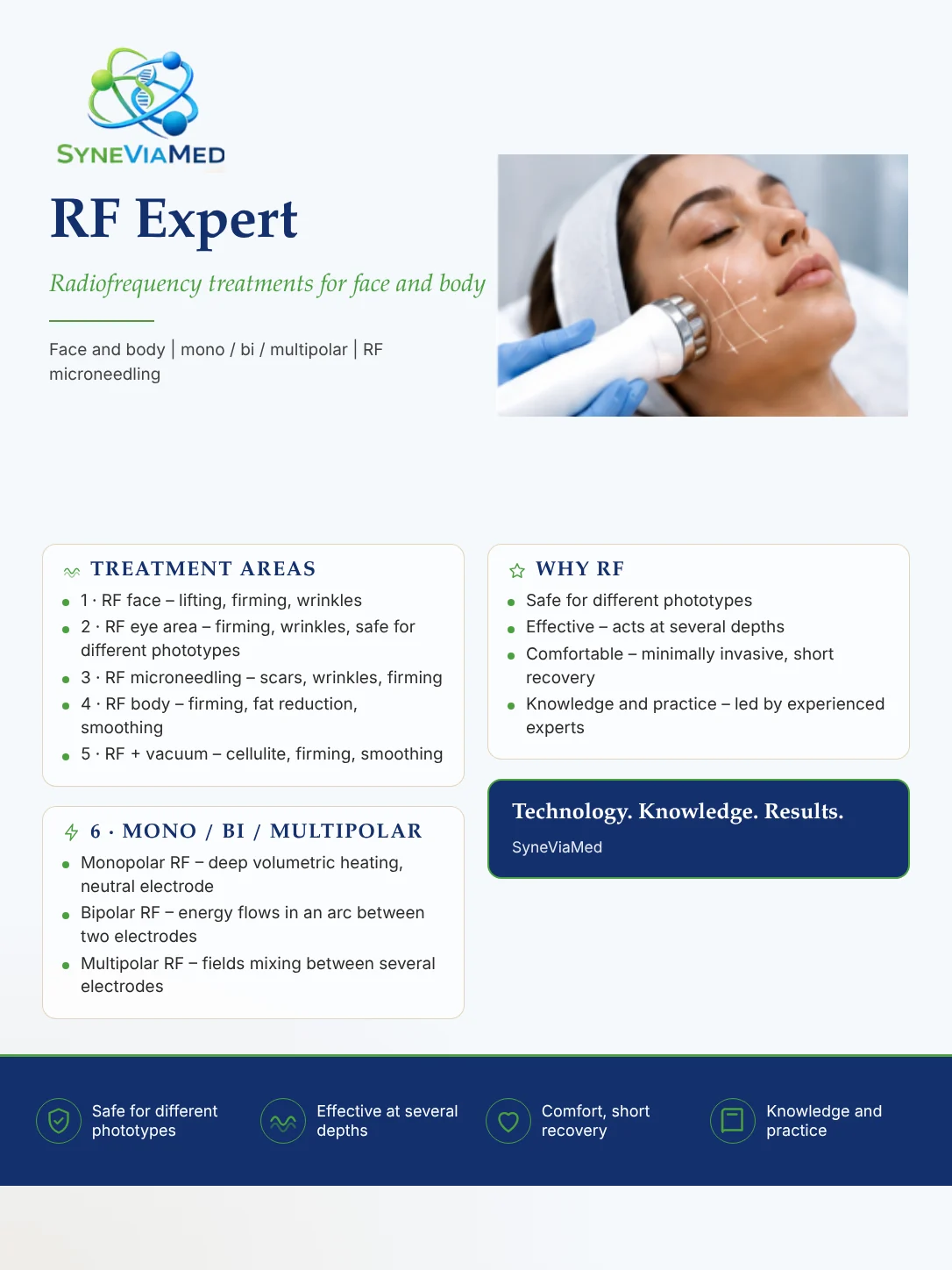
- Monopolar RF – deep penetration (down to subcutaneous tissue), larger heating volume, effective for lifting and reducing laxity
- Bipolar RF – more superficial action, greater energy control, improves skin quality and wrinkles
- Multipolar RF – even energy distribution, greater safety and comfort, often used in combination therapies
- Microneedling RF (fractional RF) – delivers energy directly to the dermis, strong collagen stimulation with limited effect on the epidermis, used for scars, pores and laxity
RF works differently from lasers – the energy is not absorbed by chromophores (e.g. melanin), which makes RF a safer option for different skin phototypes.
Course programme (advanced)
1. RF physics basics
- characteristics of RF current (0.3–10 MHz)
- tissue resistance (impedance) and heat generation
- how the effect depends on time and temperature
- volumetric vs point heating
2. RF technologies – overview of systems
- monopolar, bipolar and multipolar RF – clinical differences
- vacuum RF systems
- microneedling RF (insulated vs non-insulated needles)
- fractional vs non-fractional RF
- combined systems: RF + light (ELOS), RF + ultrasound
3. Procedural anatomy
- layered structure of the skin and subcutaneous tissue
- fibrous septa and their role in cellulite
- fat distribution
- danger zones (e.g. periorbital area, anterior neck)
4. Treatment protocols – face
- skin lifting and tightening
- improving facial contour
- reducing wrinkles
- eye-area therapy
- microneedling RF for scars
5. Treatment protocols – body
- firming the skin of the abdomen, arms and thighs
- cellulite therapy (RF + vacuum)
- reducing localised fat
- improving skin tone after weight loss
6. Treatment parameters and personalisation
- choosing temperature and exposure time
- the importance of surface temperature control
- number of sessions and intervals between treatments
- protocols for individual needs and indications
7. Safety and complications
- overheating and risk of burns
- PIH – less common than with lasers, but possible
- safety procedures
- patient selection
Combination therapies – an evidence-based approach
Research shows that RF achieves the best results in combination therapies when properly combined with other technologies such as HIFU, cryotherapy, laser therapy and electrotherapy.
Reviews
If you've added a review and it doesn't appear on the list, it may be pending moderation.
Leave feedback on the product


