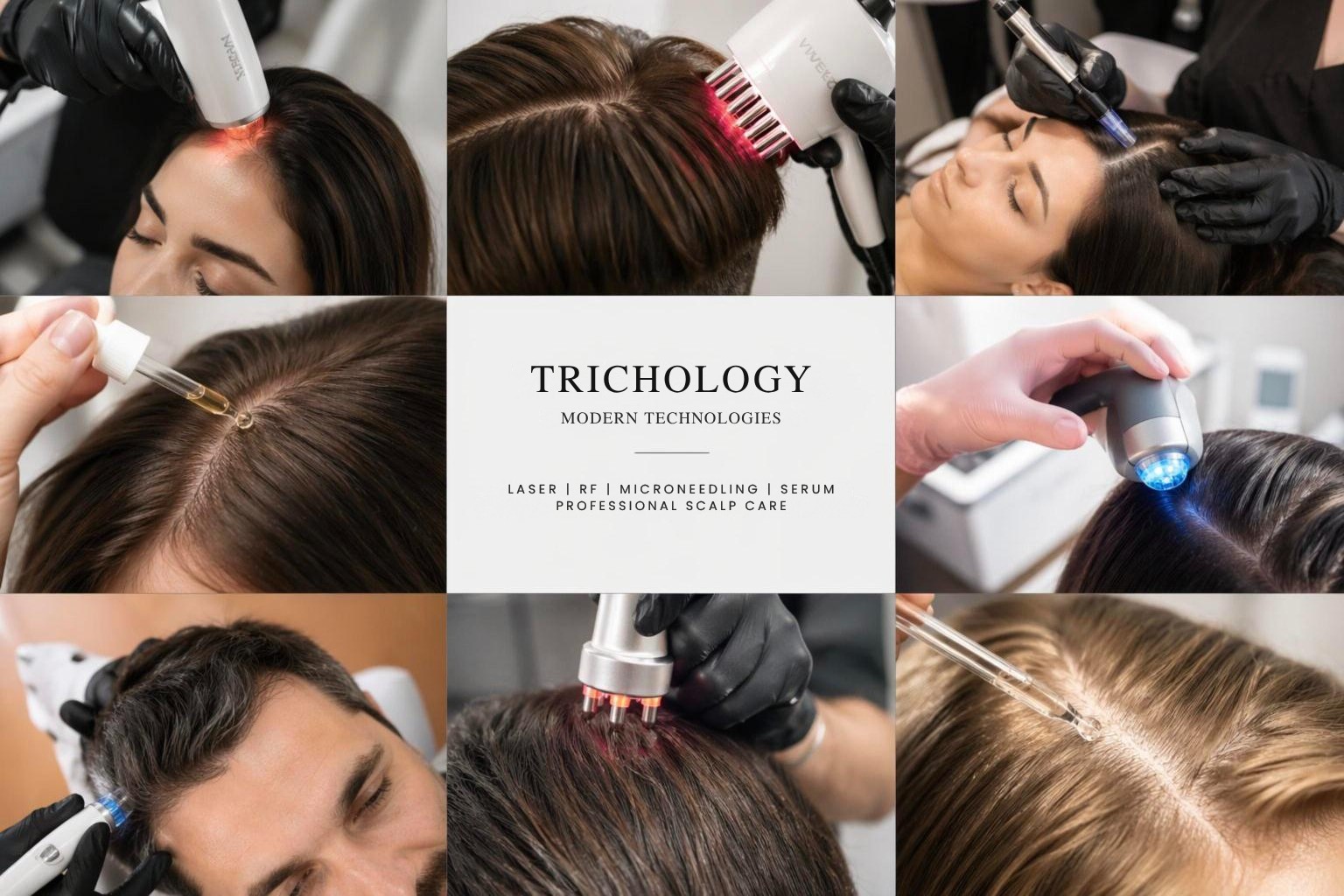
Trichology in a nutshell. 20 facts from scientific research
- Combined therapies are more effective than single procedures. The latest reviews on androgenetic alopecia show the advantage of a multimodal approach over monotherapy, particularly when device-based treatments are combined with topical therapy and home care.
- Microneedling increases hair density and thickness in androgenetic alopecia. Meta-analyses from 2023–2025 indicate that microneedling improves outcomes, especially as an adjunctive method.
- Microneedling + minoxidil works better than minoxidil alone. This is one of the most consistently replicated findings in clinical research on AGA.
- PRP improves hair density and thickness, but protocols remain heterogeneous. Efficacy is promising, although the quality of evidence ranges from low to moderate owing to differences in plasma preparation.
- PRP + minoxidil usually gives better results than minoxidil alone. A meta-analysis of RCTs showed significantly better hair density with a similar adverse-effect profile.
- PRP is also effective in women with thinning hair. Pooled studies confirm improvements in density, hair shaft thickness and pull test results.
- Low-level light and LED/LLLT is one of the best-documented non-pharmacological methods.Reviews from 2024–2025 indicate a significant improvement in hair density and diameter, particularly in AGA.
- Light-based treatments have a favourable safety profile and work well as adjunctive or maintenance therapy.
- Fractional lasers are promising in the treatment of androgenetic alopecia. Studies suggest improved regrowth and the potential to use them to enhance the penetration of active ingredients as well.
- Laser- or energy-assisted drug delivery (LEADD) is one of the most interesting directions of development. In studies on AGA and AA, devices have been combined with minoxidil, PRP, steroids, methotrexate and growth factors.
- Microneedle radiofrequency (MNRF) may improve the appearance of alopecia
- PEMF and other adjunctive physical therapies appear in modern reviews as a direction for development, but still require better comparative studies.
- Scalp mesotherapy makes the most sense when it is based on a specific protocol and a well-chosen active ingredient.
- Alopecia areata (AA) can also benefit from treatment technologies, especially in models combined with microneedling, PRP or methods that enhance the penetration of active ingredients.
- The scalp microbiome is now one of the key topics in trichology. Microbiome imbalances are associated with dandruff, seborrhoeic dermatitis, dry scalp and some forms of alopecia, which opens the way to microbiome therapies and targeted care.
- Natural preparations targeting the microbiome and inflammation can improve the symptoms of dry scalp. In an interventional study, a preparation containing probiotic extracts, honey, turmeric and vitamin B12 reduced the severity of symptoms.
- In seborrhoeic dermatitis of the scalp and dandruff, there are promising data for herbal and plant-based preparations, especially those with anti-inflammatory, antifungal and sebum-regulating properties, although not all have equally strong clinical evidence.
- Sebum production and sebaceous gland activity can also be modulated naturally. A study on Triphala showed reduced scalp sebum secretion in people with seborrhoea.
- Rosemary remains one of the most frequently cited natural substances supporting AGA therapy. A classic clinical trial showed an effect comparable to 2% minoxidil after 6 months, and more recent reviews still list rosemary among the most promising natural ingredients.
- The most cutting-edge direction in trichology is regenerative therapies and the Wnt/β-catenin pathway.More recent reviews describe the development of therapies based on growth factors, cells, hair follicle neogenesis and modulation of growth pathways, but these are still mainly emerging directions.
References
- Journal of Clinical Medicine (2024). Combined therapies in androgenetic alopecia – systematic review.
- Dermatologic Therapy (2023). Microneedling in androgenetic alopecia: systematic review and meta-analysis.
- International Journal of Trichology (2022). Microneedling combined with minoxidil in AGA treatment.
- Aesthetic Plastic Surgery (2024). Platelet-rich plasma for hair loss: systematic review.
- Journal of Cosmetic Dermatology (2023). PRP combined with minoxidil in androgenetic alopecia: meta-analysis.
- Dermatologic Surgery (2023). PRP effectiveness in female pattern hair loss.
- Lasers in Medical Science (2024). Low-level laser therapy for hair growth: review.
- Photomedicine and Laser Surgery (2022). Safety and efficacy of LLLT in alopecia.
- Journal of Drugs in Dermatology (2024). Fractional laser in androgenetic alopecia.
- Dermatologic Clinics (2023). Laser-assisted drug delivery in dermatology (LEADD).
- Journal of Cosmetic and Laser Therapy (2024). Microneedle radiofrequency in hair disorders.
- Bioelectromagnetics (2023). PEMF in regenerative medicine and dermatology.
- Clinical, Cosmetic and Investigational Dermatology (2023). Mesotherapy in hair loss treatment.
- Journal of the American Academy of Dermatology (2023). Alopecia areata treatment approaches review.
- Experimental Dermatology (2024). Scalp microbiome and hair disorders.
- International Journal of Cosmetic Science (2023). Microbiome-targeted scalp therapies.
- Mycoses (2022). Herbal treatments in seborrheic dermatitis.
- Journal of Ethnopharmacology (2021). Triphala and sebaceous activity.
- Skinmed (2015). Rosemary oil vs minoxidil in androgenetic alopecia.
- Cells (2024). Wnt/β-catenin signaling in hair follicle regeneration.


