Types of devices used in aesthetics – market reality versus functional classification
When discussing the various types of devices that improve skin condition, they can be divided into three basic groups:
- home-use devices
- cosmetic (aesthetic) devices
- medical devices
The market offers a growing number of advanced devices for home treatments, such as lasers, IPL, HIFU and RF, with varying power and effectiveness.
Cosmetic devices are usually characterised by higher energy parameters, as they are intended for professional aesthetic treatments.
By contrast, medical devices are subject to specific regulations and must hold the appropriate certificates. Their applications include therapeutic procedures, among them the use of technologies such as HIFU, RF and laser in the treatment of selected pathological lesions, including neoplastic lesions.
A device’s intended purpose and its legal and tax consequences
An important factor distinguishing devices is their intended purpose, which also determines how they are taxed:
- medical devices → often subject to a reduced VAT rate (8%) or exempt
- aesthetic devices → subject to the standard VAT rate (23%)
It should be emphasised that:
👉 cosmetic devices, including those used in aesthetic cosmetology, do not hold medical certification and are not intended for treating disease.
As a consequence:
- they may not be used in medical procedures
- they are classified as equipment for improving appearance
Availability of technology versus safety – a systemic problem
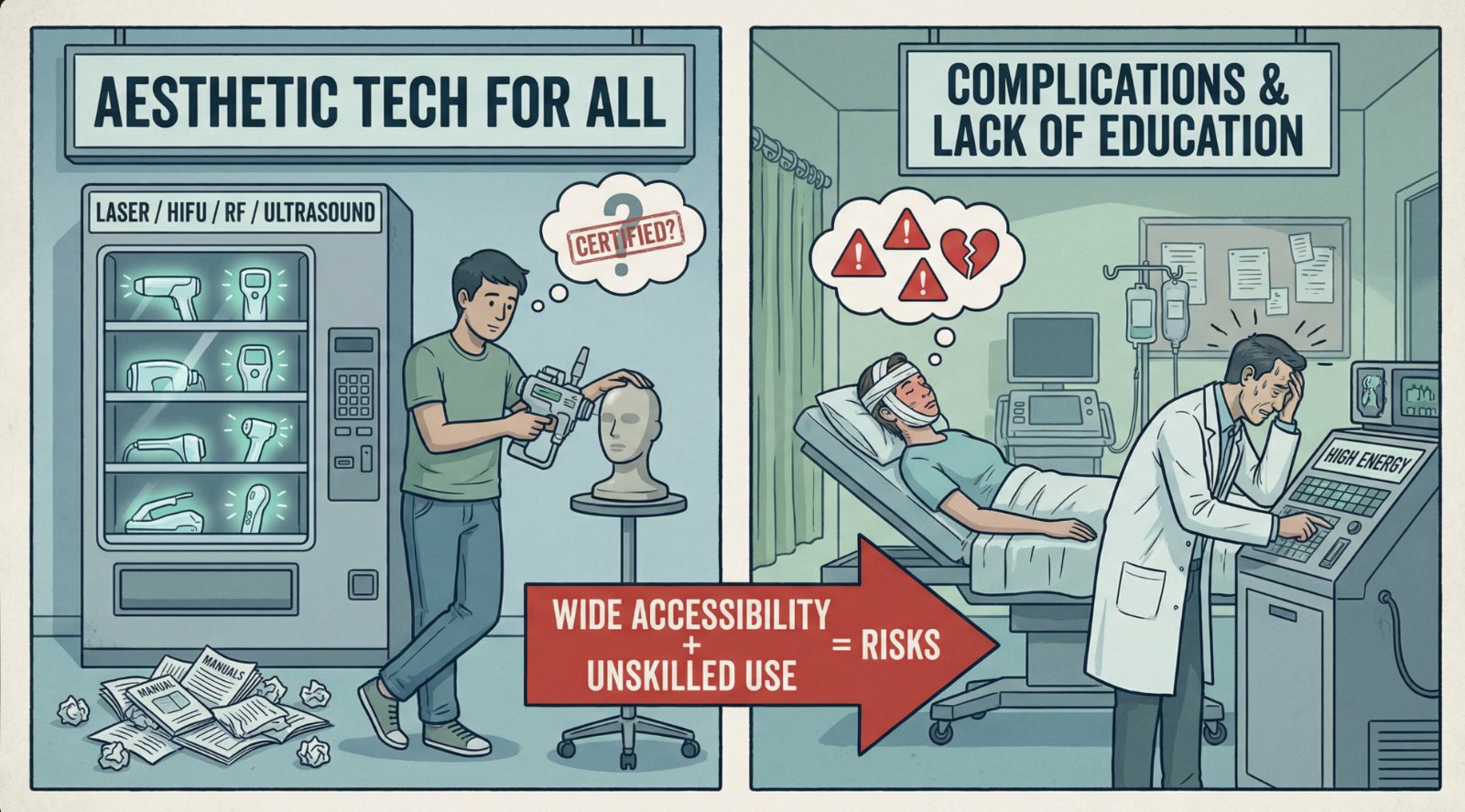
A significant problem in the market is the widespread availability of aesthetic devices.
In practice:
- these devices can be purchased by any entity
- it is possible to start a business in the aesthetics sector freely
- treatments may be performed after only brief training
There is no system for verifying competence before starting a business.
Lack of regulation and standardisation
Poland does not have:
- a uniform quality control system for aesthetic services
- a licensing system for operators
- a defined scope of professional competences
Oversight is limited mainly to sanitary inspection.
👉 The lack of competence regulations is one of the main sources of risk in the sector.
Education and technological development
The rapid development of aesthetic technologies demands continuous professional development.
At the same time:
- curricula are inconsistent
- the standard of training varies considerably
- some programmes remain out of date in relation to the market
In practice, this means that:
👉 formal education is not keeping pace with technological development and the needs of the labour market
This is why competences are often supplemented through private courses and training.


